
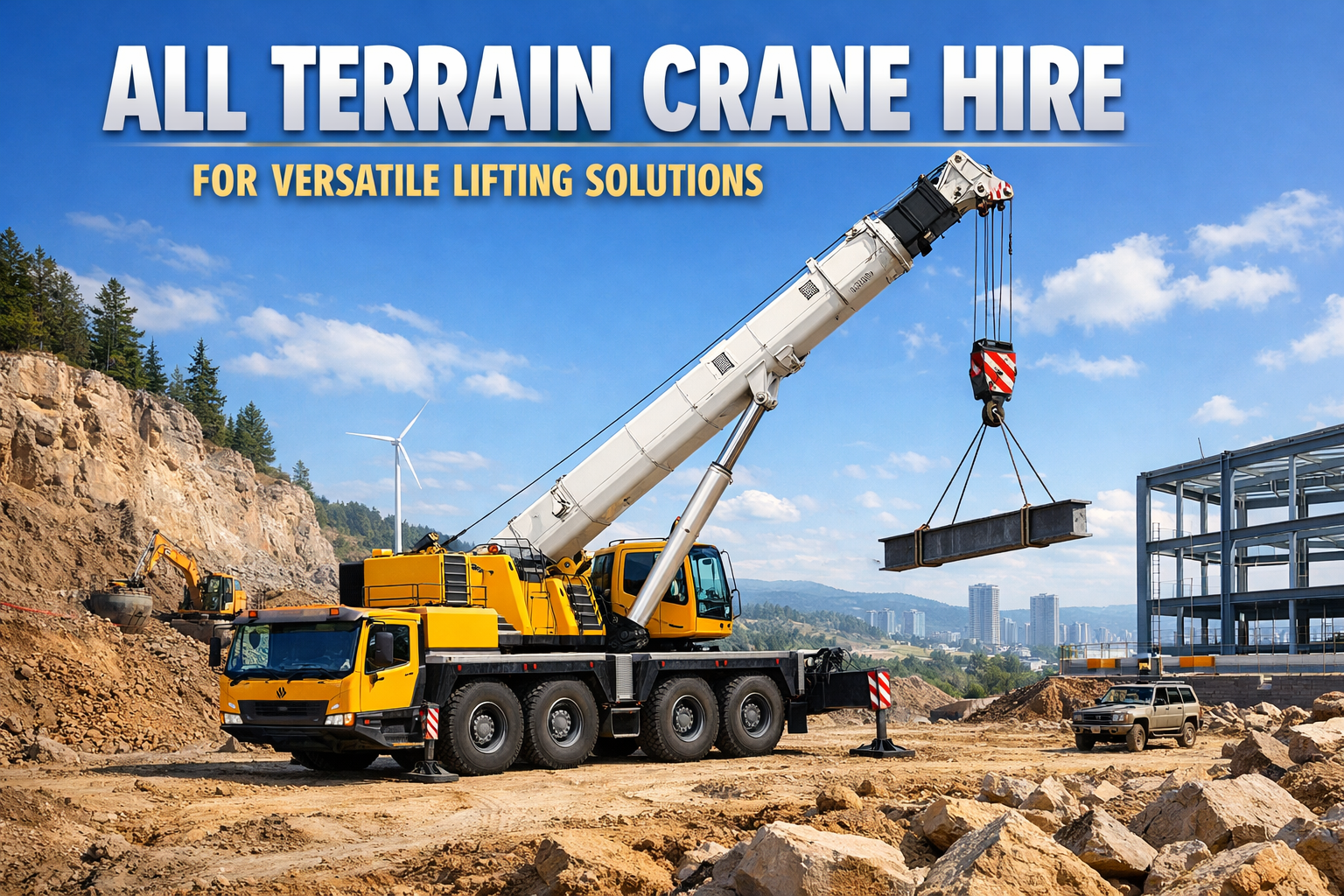
Ever found yourself staring at a construction site wondering how on earth you’ll get that heavy equipment into position? Or perhaps you’ve got a project in a remote location where standard machinery simply won’t cut it? What if there was a single piece of equipment that could handle virtually any terrain while delivering exceptional lifting power?
All terrain crane hire offers exactly that – a flexible, powerful solution for projects that demand versatility. These remarkable machines combine the best features of different crane types, making them ideal for everything from urban construction sites to rugged mining operations. Whether you’re working on a wind farm installation in regional Australia or tackling an inner-city infrastructure project, all terrain cranes deliver the adaptability you need.
In this guide, we’ll explore everything you need to know about hiring all terrain cranes. You’ll discover what makes these machines unique, understand their capabilities, and learn how to choose the right crane for your specific project. We’ll also cover safety considerations, cost factors, and practical tips for getting the best value from your hire. Let’s get stuck into it.
Understanding All Terrain Crane Capabilities
All terrain cranes are essentially the Swiss Army knives of the lifting world. They feature multiple axles (typically between two and nine), all-wheel drive, and all-wheel steering capabilities. This combination allows them to travel on public roads at highway speeds while also navigating rough, unpaved surfaces with ease.
Key Features That Make All Terrain Cranes Unique
What sets these cranes apart is their dual capability. They can drive to a job site under their own power, eliminating the need for separate transport vehicles. Their telescopic booms extend quickly, reducing setup time significantly. Plus, their outrigger systems provide excellent stability on uneven ground.
Lifting capacities typically range from 30 tonnes right up to 1,200 tonnes for the largest models. Boom lengths can extend beyond 100 metres when fully equipped with jibs and extensions. This impressive reach makes them perfect for tall structures and hard-to-access locations.
How Do All Terrain Cranes Differ from Mobile Cranes?
While all mobile cranes can move between sites, all terrain cranes offer superior off-road performance. Traditional truck-mounted cranes struggle on soft ground or steep gradients. All terrain models, with their specialised suspension and drive systems, handle these challenges brilliantly.
Common Applications for All Terrain Crane Hire
The versatility of all terrain cranes means they’re suitable for an incredibly wide range of projects across Australia.
Construction and Infrastructure Projects
From high-rise building construction to bridge installations, these cranes excel in demanding environments. They’re particularly valuable when projects span multiple locations, as they can relocate quickly without requiring low-loader transport.
Mining and Resource Sector Operations
Australia’s mining industry relies heavily on all terrain cranes. Their ability to navigate haul roads and work in dusty, uneven conditions makes them indispensable. They handle everything from equipment maintenance to module installation.
Wind Farm and Renewable Energy Installations
Wind turbine installation demands exceptional reach and lifting capacity. All terrain cranes can access remote wind farm sites while delivering the precision required for turbine assembly. They’re also proving essential for solar farm construction and maintenance.
Emergency Response Situations
When disasters strike, all terrain cranes can reach affected areas quickly. They assist with debris removal, infrastructure repair, and emergency recoveries where other equipment simply cannot access.
Benefits of Hiring an All Terrain Crane
Choosing to hire rather than purchase an all terrain crane makes sound financial sense for most businesses.
Cost-Effectiveness Compared to Ownership
Purchasing an all terrain crane represents a significant capital investment – we’re talking millions of dollars for larger models. Hiring eliminates this upfront cost while also removing ongoing expenses like maintenance, storage, insurance, and depreciation.
Access to Modern, Well-Maintained Equipment
Reputable hire companies continuously update their fleets. This means you’ll have access to the latest technology and safety features without the burden of ownership. Equipment is professionally maintained and inspected, ensuring reliability when you need it most.
How Much Does It Cost to Hire an All Terrain Crane?
Hire rates vary considerably based on crane capacity, duration, and whether you need an operator included. Daily rates for smaller all terrain cranes typically start around $2,000-$3,000, while larger capacity machines can exceed $10,000 daily. Long-term hires often attract discounted rates, so it’s worth discussing your project timeline with hire companies.
Choosing the Right All Terrain Crane for Your Project
Selecting the appropriate crane requires careful consideration of several factors.
Assessing Your Lifting Requirements
Start by determining your heaviest load weight and the maximum reach required. Don’t forget to factor in the weight of any rigging equipment. A qualified lift planner can help you calculate these requirements accurately.
Site Accessibility and Ground Conditions
Consider how the crane will access your site. Are there narrow roads, low bridges, or weight-restricted surfaces? What’s the ground like at the lifting location? Soft or unstable ground may require additional preparation or matting.
What Size Crane Do I Need for My Lift?
This depends on three main factors: the load weight, the radius at which you’re lifting, and any height obstacles. Remember that crane capacity decreases as the radius increases. A 100-tonne crane won’t lift 100 tonnes at full boom extension – you’ll need to check the load charts carefully.
Working with Hire Companies
Good hire companies will help you determine the right specifications. Provide them with detailed information about your lift, including accurate weights, dimensions, and site conditions. They can then recommend the most suitable and cost-effective option.
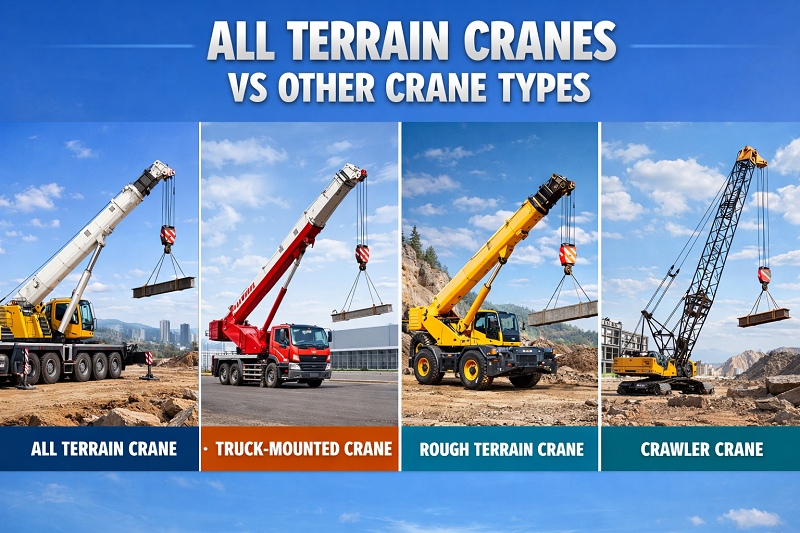
All Terrain Cranes vs Other Crane Types
Understanding when an all terrain crane is the best choice helps you make informed decisions.
All Terrain Crane vs Rough Terrain Crane: Which Is Better?
Rough terrain cranes excel in off-road conditions but cannot travel on public roads legally. If your project is entirely on-site, they may suffice. However, for projects requiring road travel between locations, all terrain cranes offer clear advantages.
When to Choose an All Terrain Crane Over a Tower Crane
Tower cranes provide excellent reach and continuous lifting for long-term projects. However, they require extensive setup time and foundations. For shorter projects or those demanding rapid mobilisation, all terrain cranes prove more practical.
Comparing All Terrain Cranes to Crawler Cranes
Crawler cranes offer exceptional stability and can move with loads suspended. Yet they travel slowly and require transport between sites. All terrain cranes sacrifice some lifting capacity for significantly greater mobility.
Safety Considerations and Compliance
Safety must remain paramount in any crane operation.
Australian Safety Regulations
All crane operations in Australia must comply with Work Health and Safety regulations and relevant Australian Standards. This includes proper lift planning, regular equipment inspections, and appropriate operator licensing.
Do I Need a Licensed Operator for Crane Hire?
Yes, absolutely. All crane operators must hold the appropriate High Risk Work Licence for the crane class they’re operating. When you opt for wet hire (crane with operator), the hire company provides a licensed, experienced operator. Dry hire means you’re responsible for sourcing qualified personnel.
Risk Assessments and Lift Planning
Every lift requires a documented risk assessment. Complex lifts may need detailed lift studies prepared by qualified engineers. Never skip this crucial step – the consequences of inadequate planning can be catastrophic.
Preparing Your Site for All Terrain Crane Operations
Proper site preparation ensures safe, efficient crane operations.
Ground conditions must support the crane’s weight, including outrigger loads which can be substantial. You may need compacted hardstand areas or load-spreading mats. Access routes should accommodate the crane’s dimensions and weight.
Check whether you need permits from local councils, especially for lifts over public areas or road closures. Weather monitoring is essential too – high winds, lightning, or heavy rain can force operations to halt.
Getting the Best Value from Your Crane Hire
Maximise your investment by planning thoroughly and communicating clearly with your hire company.
Accurate project planning reduces costly delays and extensions. Have all loads prepared and rigged before the crane arrives. Build relationships with reputable hire companies – they’ll prioritise good customers and may offer preferential rates.
Consider combining lifts where possible to reduce total hire time. And always factor in realistic timeframes – rushing crane operations to save money often creates dangerous situations.
Conclusion
All terrain crane hire provides an outstanding solution for projects demanding flexibility, power, and reliability. These remarkable machines handle diverse environments while delivering impressive lifting capabilities that few other crane types can match.
Choosing to hire rather than purchase makes excellent sense for most Australian businesses. You gain access to modern, well-maintained equipment without the substantial capital outlay and ongoing ownership costs. The key lies in selecting the right crane for your specific needs and working with reputable hire companies who understand your requirements.
Whether you’re tackling a construction project, supporting mining operations, or installing renewable energy infrastructure, all terrain crane hire offers the versatility you need. Take time to assess your requirements carefully, prioritise safety above all else, and build strong relationships with quality hire providers. Your projects will run smoother, safer, and more cost-effectively as a result. Ready to discuss your next lift? Reach out to experienced crane hire specialists who can guide you through the process.