
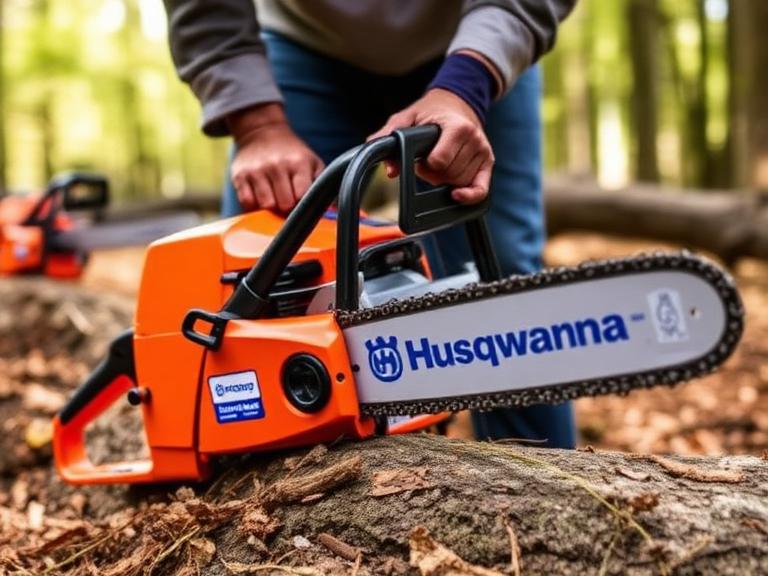
Walk into any hardware store, nursery, or outdoor equipment dealership, and you will almost certainly spot an orange-and-grey chainsaw on the shelf. That orange belongs to Husqvarna — and there is a very good reason it has become the colour most associated with quality outdoor cutting tools.
Whether you need to clear storm-damaged branches in your backyard, cut firewood for winter, or tame an overgrown garden, a Husqvarna chainsaw is one of the most trusted tools you can reach for. However, with so many models available — from lightweight beginner-friendly saws to professional-grade powerhouses — choosing the right one can feel overwhelming.
This guide breaks down everything a homeowner needs to know about Husqvarna chainsaws in 2024: the technology inside them, the best models for different tasks, how to stay safe, and how to keep your saw running for years. Let us get into it.
A Brief History of Husqvarna Chainsaws
Husqvarna is a Swedish company with a surprisingly long history — founded all the way back in 1689 as a royal arms factory on the banks of the Huskvarna River. Over the centuries, the company pivoted through several industries, eventually settling into outdoor power equipment as one of its core strengths.
The company introduced its first chainsaw in 1959, and that decision changed the industry. Since then, Husqvarna has built a reputation for combining Scandinavian engineering precision with practical, user-focused design. Today, the brand serves everyone from weekend gardeners to professional arborists and forestry workers — and in 2024, the product lineup is stronger than ever.
Why Homeowners Choose Husqvarna Over Other Brands
There is no shortage of chainsaw brands on the market. Stihl, Echo, DeWalt, and Greenworks all compete for the same shelf space. So what keeps homeowners coming back to Husqvarna?
The honest answer is a combination of three things: reliable technology, build quality that holds up season after season, and a model range that genuinely caters to every skill level and task. Husqvarna is also one of the few brands that invests heavily in reducing operator fatigue — something any homeowner who has spent a long afternoon in the garden will deeply appreciate.
| Brand | Best for | Husqvarna advantage |
| Husqvarna | Home & professional use | Best fuel efficiency + lowest vibration in class |
| Stihl | Raw cutting power | Husqvarna is lighter and more fuel-efficient |
| Echo | Budget buyers | Husqvarna has better technology and durability |
| Battery brands (DeWalt, Greenworks) | Light occasional tasks | Husqvarna offers both gas and battery options |
Key Technologies Inside Every Husqvarna Chainsaw
One of the things that sets Husqvarna apart is that their technology is not just marketing speak — each feature solves a real problem that homeowners and professionals face. Here is a plain-language breakdown of the most important ones.
X-Torq Engine
Husqvarna’s X-Torq engine technology reduces exhaust emissions by up to 75% and improves fuel efficiency by up to 20% compared to conventional two-stroke engines. In practical terms, that means less money spent on fuel and a smaller environmental footprint — important for anyone cutting in their own garden or near their home.
Air Injection
Dust and debris are a chainsaw engine’s worst enemy. Husqvarna’s Air Injection system uses centrifugal force to remove larger particles before they reach the air filter. The result is a cleaner engine, a longer-lasting filter, and significantly less downtime for maintenance. Think of it as a pre-filter for your filter.
LowVib Technology
Vibration is the hidden enemy of chainsaw comfort. Prolonged exposure to high vibration levels causes hand fatigue, numbness, and over time can contribute to conditions like hand-arm vibration syndrome (HAVS). Husqvarna’s LowVib anti-vibration system uses dampeners built into the handles to absorb vibration before it reaches the operator’s hands. The newly launched 564 XP holds the record as the lowest-vibration gas chainsaw Husqvarna has ever produced.
Smart Start
Nothing kills the enthusiasm for a garden project faster than a chainsaw that will not start. Husqvarna’s Smart Start system reduces the resistance in the starter cord by up to 40%, making it significantly easier to get the engine running — even in cold weather or after long periods of storage. The 450X Rancher, for example, is 40% easier to start than its predecessor thanks to this system.
AutoTune
Carburetor adjustments are something most homeowners do not want to deal with. AutoTune eliminates that problem entirely — it automatically adjusts engine settings to maintain optimal performance regardless of altitude, humidity, temperature, or fuel quality. You simply start the saw and cut.
Fuel Injection (New in 2024— 564 XP)
Husqvarna’s brand new 564 XP, launched in early 2024, is the company’s first ever fuel-injected chainsaw. Fuel injection delivers a more precise fuel-air mixture than a traditional carburettor, resulting in instant throttle response, better fuel efficiency, and faster adaptation to changing environmental conditions. It is the same concept that transformed car engines decades ago — now applied to professional chainsaws.
Best Husqvarna Chainsaw Models for Homeowners in 2024
Husqvarna produces dozens of models, but for homeowners the choice narrows down considerably based on your experience level and the type of work you need to do. Here is a practical breakdown.
Best for Beginners — Husqvarna 120 Mark III & 135 Mark II
If you are new to chainsaws and need something for light garden work — pruning fruit trees, cutting small logs, tidying up storm damage — the 120 Mark III and 135 Mark II are the right starting points. Both feature the X-Torq engine for fuel efficiency, Smart Start for easy ignition, and LowVib dampeners to keep fatigue at bay. They are compact, lightweight, and genuinely forgiving for first-time users.
Best Mid-Range — Husqvarna 445S & 450S Rancher (New 2024)
Husqvarna launched two significant updates to its popular 400 series in 2024. The 445S and 450S Rancher both feature optimised X-Torq engines, reinforced crankcases, and modern redesigns while keeping the trusted Smart Start, Air Injection, and LowVib technologies homeowners already rely on.
The 445S delivers 20% faster cutting than its predecessor and includes practical upgrades like a quick-release cylinder cover and high-visibility felling marks. The 450S Rancher is the choice for property owners who tackle larger, more demanding jobs — firewood, felling small-to-medium trees, and storm cleanup.
Best Heavy-Duty Homeowner Saw — Husqvarna 460 Rancher
For homeowners with larger properties, significant firewood needs, or bigger trees to manage, the 460 Rancher with its 60.3cc engine and 24-inch bar is a serious workhorse. It combines professional-level power with the ergonomic features that prevent fatigue — making it manageable even for non-professionals tackling tough jobs.
Best Battery Chainsaw — Husqvarna 550i XP (New 2024)
For homeowners who prefer cordless convenience, the 550i XP is Husqvarna’s most powerful battery chainsaw as of 2024, capable of handling a 20-inch bar. It pairs with either the B330X battery for lightweight maneuverability or the B540X for maximum power and runtime. A new graphical display shows real-time battery levels, saw health, and status updates — a genuinely useful addition for home users who do not want to be caught mid-cut with a flat battery.
Chainsaw Safety for Homeowners — What You Must Know
A chainsaw is one of the most useful garden tools you can own — and also one of the most dangerous if used carelessly. Husqvarna builds multiple safety features into every saw, but no technology replaces proper technique and the right protective gear.
Personal Protective Equipment (PPE)
Before starting any chainsaw, make sure you are wearing the following:
- Chainsaw-rated helmet with integrated face shield and ear protection
- Cut-resistant chainsaw chaps or trousers
- Cut-resistant gloves
- Steel-toed, cut-resistant boots
- High-visibility vest for working in areas with other people nearby
Built-in Safety Features on Husqvarna Chainsaws
- Chain brake — stops the chain instantly if kickback is detected
- Right-hand guard — protects the hand from a broken chain
- Throttle lockout — prevents accidental throttle engagement
- Low-kickback bar and chain options — reduces the risk of the saw jumping back
Safe Operating Tips
- Never operate a chainsaw above shoulder height
- Always maintain a firm two-handed grip on the saw
- Be aware of the kickback zone — the upper quarter of the bar tip
- Never cut with the tip of the bar unless you are trained to do so
- Keep bystanders at least 15 metres away while cutting
- Always switch the chain brake on before setting the saw down
How to Maintain Your Husqvarna Chainsaw
A well-maintained chainsaw lasts significantly longer and performs better on every cut. The good news is that Husqvarna chainsaws are designed with maintenance in mind — many newer models include quick-release covers and tool-free access to key components.
Regular Maintenance Checklist
| Task | Frequency | Why it matters |
| Clean the air filter | After every 5 hours of use | Prevents engine damage from dust |
| Check bar and chain oil level | Before every use | Keeps chain lubricated, reduces wear |
| Sharpen the chain | Every 2-3 hours of cutting | Maintains cutting speed and safety |
| Check and clean the spark plug | Every 25 hours of use | Ensures reliable starting |
| Inspect chain tension | Before every use | Prevents chain coming off the bar |
| Clean cooling fins | Every 25 hours | Prevents engine overheating |
| Flush fuel system | Before long-term storage | Prevents gum deposits in carburetor |
Storage Tips
If you are storing your Husqvarna chainsaw for more than 30 days, drain the fuel tank completely or use a fuel stabiliser. Store the saw in a dry, dust-free location — preferably in a case or with the bar covered. A clean, dry chainsaw will be ready to go the moment you need it next season.
How to Choose the Right Husqvarna Chainsaw for Your Garden
With so many models available, the right choice comes down to three simple questions. Answering them honestly will point you directly to the model that fits your needs.
- How often will you use it? Occasional users (a few times a year) are fine with a lightweight 120 or 135 series. Regular users — anyone cutting firewood monthly or managing a large property — should look at the 400 series or above.
- What is the largest tree or log you will cut? A good rule of thumb: your bar length should be at least 2 inches longer than the diameter of the wood you are cutting. For most home gardens, 16-18 inches is perfectly adequate.
- Gas or battery? Gas chainsaws offer more power and unlimited runtime. Battery chainsaws are quieter, require less maintenance, and are better suited for lighter, shorter tasks. If you already own Husqvarna battery tools, the 550i XP will share batteries — a significant cost saving.
What Is Next for Husqvarna Chainsaws?
Husqvarna’s 2024lineup signals a clear direction for the brand: fuel injection for professional saws, more powerful battery options, and smarter onboard technology like real-time diagnostics and app connectivity. The 564 XP’s fuel injection system and the 550i XP’s graphical control screen both point toward chainsaws that are increasingly intelligent and easier to use.
For homeowners, this is good news. As professional-grade technology filters down to residential models — as it always does — future Husqvarna home saws will be easier to start, more fuel-efficient, and safer than ever before.
Frequently Asked Questions – Husqvarna Chainsaws
Are Husqvarna chainsaws worth the money?
For most homeowners, yes. Husqvarna chainsaws carry a higher upfront price than budget brands, but they last significantly longer, require less frequent maintenance, and are genuinely more comfortable to use. Over the lifetime of the tool, they often work out cheaper than replacing a budget saw every few years.
What is the best Husqvarna chainsaw for home use?
For most homeowners, the Husqvarna 445S (new 2024) hits the sweet spot. It has enough power for firewood, storm cleanup, and occasional tree felling, without being unnecessarily heavy or complex for a non-professional user.
How long do Husqvarna chainsaws last?
With proper maintenance, a Husqvarna chainsaw can last 10 years or more. Professional models used in commercial settings regularly clock thousands of hours before needing major overhauls.
Husqvarna vs Stihl — which is better for homeowners?
Both are excellent brands. Husqvarna generally has the edge in fuel efficiency, lighter weight, and anti-vibration technology — which matters a lot for occasional home users. Stihl is often preferred for raw cutting power and its widespread dealer network. For a homeowner who prioritises comfort and ease of use, Husqvarna is typically the better fit.
Can I use a Husqvarna chainsaw for cutting firewood?
Absolutely. The 445S Rancher, 450S Rancher, and 460 Rancher are all well-suited for firewood cutting. If you cut firewood regularly, invest in a model with at least an 18-inch bar and the AutoTune feature for hassle-free starting and consistent performance.
Final Thoughts
Husqvarna has spent over 65 years refining the chainsaw — and the results speak for themselves. Whether you are picking up a chainsaw for the first time or upgrading from an older model, there is a Husqvarna that fits your garden, your skill level, and your budget.
The 2024lineup is the strongest yet, with new models for both residential and professional users, battery-powered options that genuinely rival gas performance, and the industry’s first fuel-injected chainsaw for those who demand the absolute best. For your garden or backyard, there are very few tools that will serve you as reliably, or as safely, as a well-chosen Husqvarna chainsaw.
Invest in the right model, keep it maintained, and it will be one of the most useful things in your garden shed for years to come.